If it feels like vet visits are getting more expensive every year… you’re not imagining it.
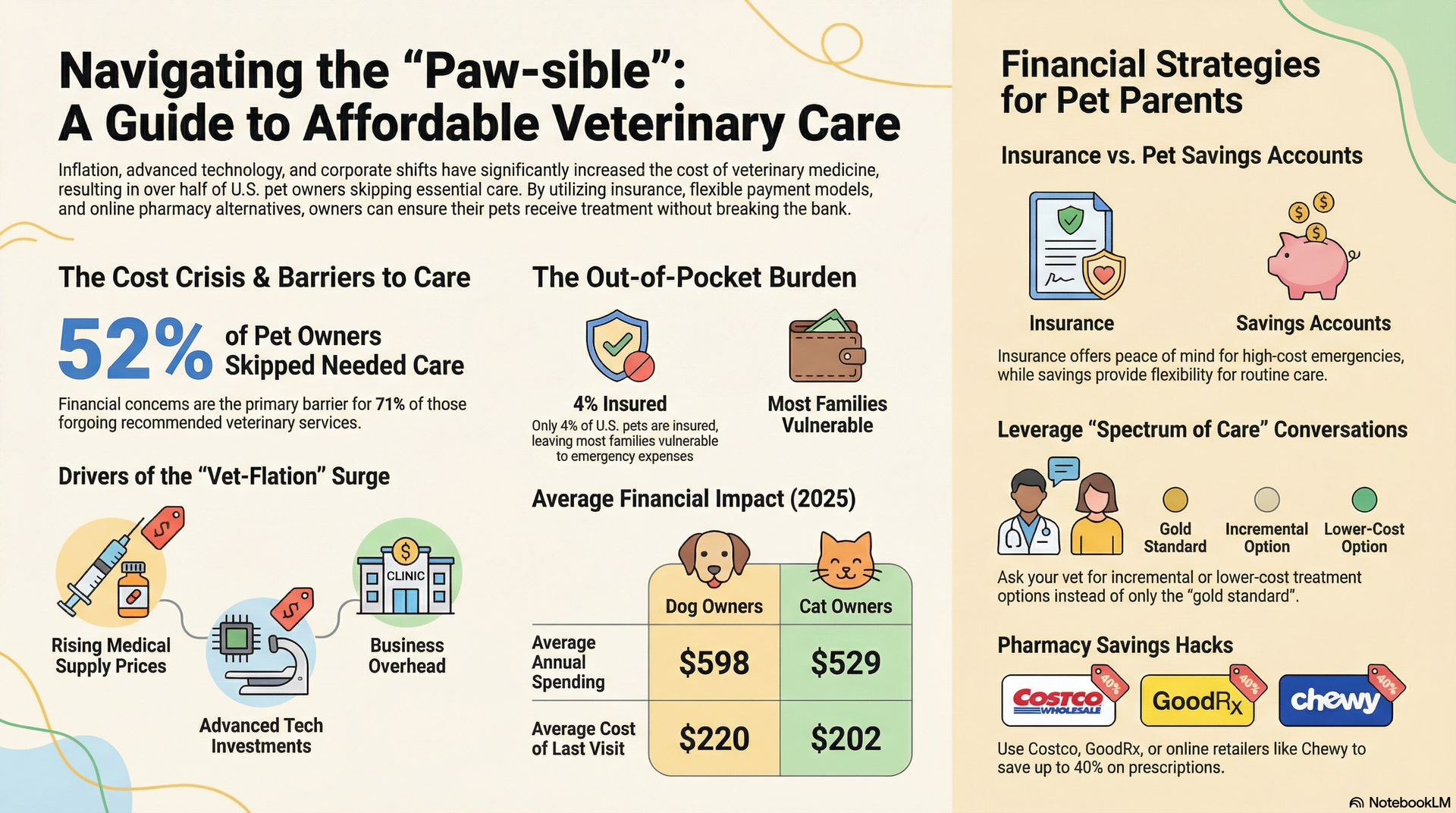
In 2025, the U.S. has about 163.6 million pet dogs and cats, but more and more owners are struggling to afford care. A major study found that 52% of pet owners skipped or declined veterinary care in the past year—mostly because they couldn’t afford it.
That’s a big deal, because when pets don’t get care early, small problems turn into expensive emergencies.
Let’s break down what’s really happening, why prices are rising, and most importantly: what you can do right now to protect your pet and your wallet.
What’s Going On With Vet Care in 2025?
Even though people still love their pets and treat them like family, the numbers show something clear:
 Pets are still everywhere
- Dogs: about 87.3 million
- Cats: about 76.3 million
Costs are climbing fast
- Average pet owner spends about $1,700 per year per pet
- That’s about $200 more than previous years
- The average vet visit is now around $200 (in 2025)
- That’s up from $147 in 2024
- Vet care makes up about 32.4% of all pet spending
 Fewer people are going to the vet
- Small animal clinics saw about a 4.6% drop in visits
- 52% of owners skipped care
- 37% went to the vet but refused some recommendations
- 15% didn’t go at all
Why Are Vet Prices Going Up?
There are two main reasons:
1) Real costs are rising (inflation + staffing + technology)
Vet clinics are businesses, and everything they need costs more:
- Medical supplies cost more
- Medications cost more
- Utilities cost more (electric, gas, etc.)
- Staff wages are rising because vet workers are in demand
Clinics are buying expensive equipment like:
- ultrasound
- monitoring tech
- advanced X-rays
- lab machines
Pets are living longer, which means:
- more chronic illness
- more frequent vet visits
- more complex care
2) Corporate ownership is changing the game
A growing number of vet clinics are being bought by:
- corporations
- private equity firms (investment companies)
Many people believe these owners raise prices to increase profit. Some common complaints include:
- pushing “gold standard” care even for minor issues
- bundling extra services (labs, X-rays) into visits
- owning large parts of the local market (less competition)
In some areas, private equity may control over 50% of clinics, plus labs and pharmacies—giving them major pricing power.
The Big Problem: Pets Need Care, But Owners Can’t Pay
This creates a painful situation:
Vets know how to help…
but families can’t afford it…
Sometimes that leads to something heartbreaking called economic euthanasia (putting a pet down only because treatment costs too much).
The good news: the industry is shifting toward more affordable models.
The New Solution: “Spectrum of Care” (Options Instead of One Expensive Plan)
This is one of the best changes happening right now.
Spectrum of Care means vets offer choices, not just the most expensive option.
Instead of:
“Here’s the best care plan. It costs $2,400.”
It becomes:
“Here are 3 care options: basic, medium, and best.”
What this looks like in real life:
- basic plan: treat the most important part first
- mid plan: better coverage with reasonable cost
- best plan: full diagnostics and ideal approach
This approach helps pets get care without owners feeling trapped.
How Clinics Are Helping Owners Pay (3 Main Methods)
1) Third-party credit (approval required)
This is like medical financing:
Examples:
- CareCredit
- ScratchPay
- Cherry
Good for: larger vet bills when you can qualify.
2) Monthly installment plans (payment over time)
Some clinics offer payment plans or use services to manage them.
Examples:
- VetBilling
- Varidi (reports a 94% repayment rate)
Good for: owners with steady income but no spare cash today.
3) Angel funds (help for owners who truly can’t afford it)
Some clinics partner with charities or have their own donation funds.
Examples:
- AVMF REACH
- myBalto
- Veterinary Care Foundation
Good for: emergencies when a family truly has no options.
Pet Insurance: Helpful, But Not Always a Money Saver
Pet insurance is often recommended, but here’s what most people don’t realize:
- Only 4% of U.S. pets are insured
- Only 34% of policyholders say they saved more money than they spent
Top-rated companies (Consumer Reports 2026)
- Lemonade: high satisfaction, fast claims using AI
- Liberty Mutual: strong pricing and eligibility
- Trupanion: sometimes pays vets directly, but can be pricey
Big downsides:
- Premiums can jump 25%–50% per year
- Pre-existing conditions usually aren’t covered
- Some issues have waiting periods or limited coverage:
-hip dysplasia
-torn ACL (cruciate ligament)
Typical monthly costs:
- Dogs: ~$54.50/month
- Cats: ~$34.50/month
The Smartest Way Owners Save Money: Medications
Many owners are skipping clinic pharmacies because they can save 10% to 50% elsewhere.
Best money-saving options:
- Chewy: huge selection, great customer service, compounding meds
- Costco Pet Rx: discounts on expensive meds like Apoquel and Heartgard
- Walmart Pet Rx: low pricing + free shipping over $35
Extra tool:
- GoodRx for Pets
-helps with “human meds” used for pets too
-pharmacists may require the vet’s DEA number
What Pet Owners Should Do Right Now (Easy Action Steps)
Here’s the part that matters most—what you should actually do.
1) Ask for 3 options, every time
Say this:
“Can you give me a basic option, a medium option, and the best option?”
This forces spectrum-of-care pricing and gives you control.
2) Talk about money early—not at the end
Say this:
“Before we go too far, can you tell me what this will roughly cost?”
This prevents surprise bills.
3) Ask about payment plans BEFORE you say no
Say this:
“Do you offer monthly payments, financing, or any help options?”
Many owners never ask—and miss support.
4) Price-check medications
Before buying meds at the clinic ask:
“Can you write the prescription so I can compare prices at Chewy, Costco, or Walmart?”
You can save a lot here.
5) Consider insurance only if your pet is young and healthy
If your pet already has health issues, insurance often won’t cover them.
Final Thought: The Future of Vet Care Is Splitting Into Two Paths
The industry is moving toward two types of care:
- High-tech “gold standard” care (expensive, top-level)
- Flexible spectrum care (affordable options for most families)
The good news is: owners are NOT powerless.
If you ask the right questions and use the right strategies, you can get your pet great care without going broke.
Share this with a friend who has a dog. Most owners don’t know they can ask for cheaper options—and it could save a pet’s life.